At a glance
- Treat the database as the long-term asset and campaigns as uses of it.
- Build the account layer first, then add the roles each campaign actually needs.
- Apply suppression to every send and feed campaign responses back into the records.
What B2B database marketing actually means
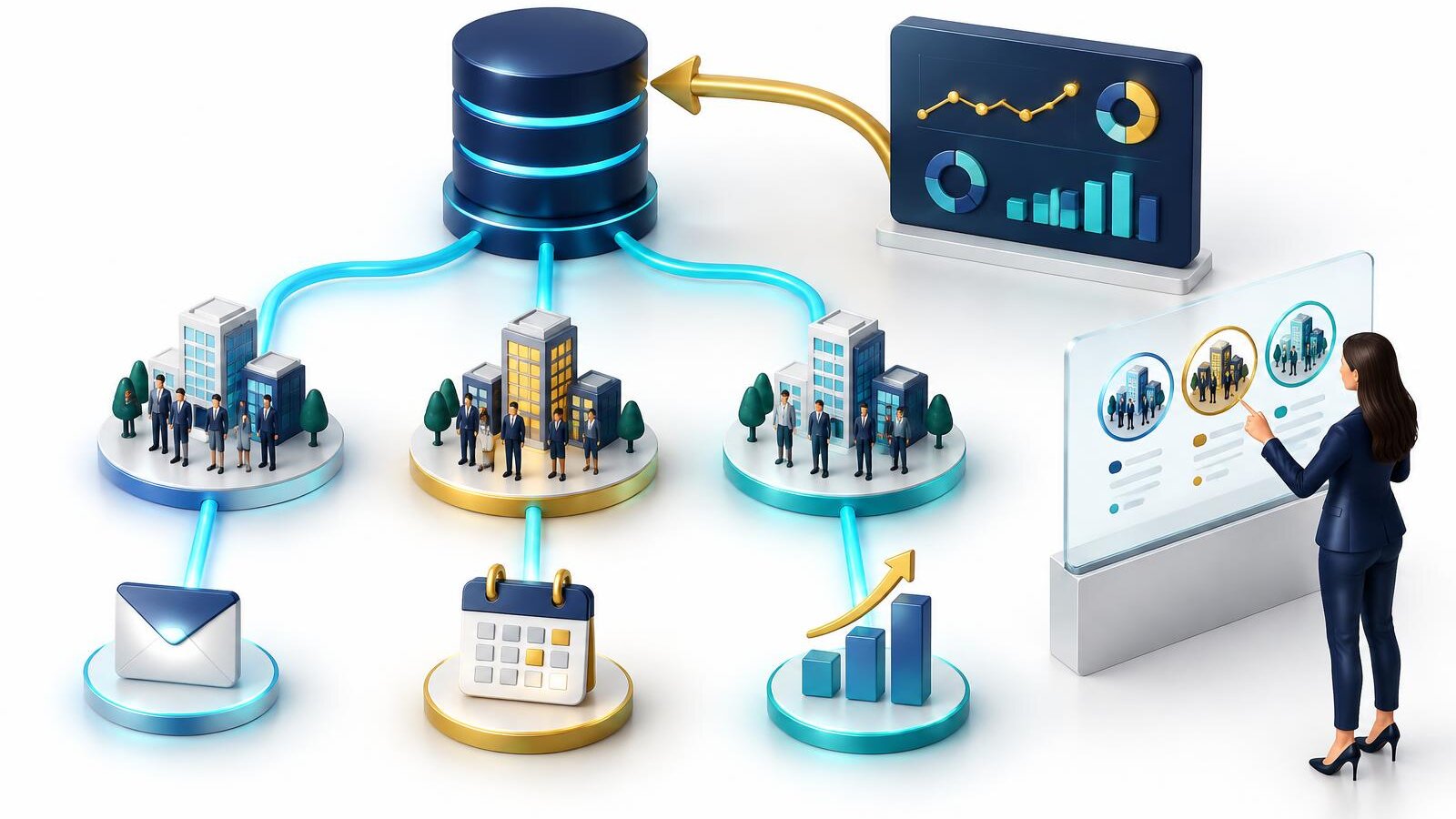
B2B database marketing is the practice of planning and running marketing from a structured, maintained database of companies and contacts, rather than from a new list bought or exported for every campaign. The database becomes the long-term asset; campaigns are the things you do with it.
The difference shows up after a few months. A team that works from one-off lists keeps rediscovering the same problems: duplicate contacts, people who already unsubscribed, companies that are already customers. A team that works from a maintained database fixes those problems once, records the outcome and gets slightly better data with every campaign it sends.
Decide what the database is for before you build it
A marketing database should answer specific questions: which accounts are in our target market, who inside them do we want to reach, what have we already sent them and how did they respond? Write those questions down first. They decide which fields are essential and which are nice to have.
This also sets the boundary between the marketing database and the CRM. Many organisations keep sales opportunities and account ownership in the CRM and use a marketing platform for contacts and engagement. That works well as long as both systems agree on a shared company identifier and on which one is the master for each field.
Build the account layer first, then the people
Start with companies, not contacts. Define the market in terms a researcher can check, such as industry, geography, employee range and business model, then build or clean the list of accounts that fit. Give every account a stable ID, a root domain and a parent company where one exists, so that later contacts attach to the right organisation.
Only then add people. Decide which functions and seniority levels matter for each campaign theme and research those roles inside each account. A smaller set of well-matched contacts at the right companies usually outperforms a much larger file of loosely related names, and it is far easier to keep current.
Segment on fields you trust
Segmentation is where database marketing earns its keep, but only if the underlying fields are reliable. Industry, company size, region, job function and seniority are the usual building blocks. If those fields are blank or inconsistent for a large share of records, segments will be smaller than expected or quietly include the wrong people.
Before planning a campaign around a segment, count it and spot-check it. Pull twenty records and ask whether a human would agree they belong there. If the segment depends on a field that was imported without standardisation, fix the field first. It is a much cheaper exercise than explaining poor results afterwards.
Make your next data project easier to review.
B2B Lead Generation DataPlan contact around accounts, not just individuals
In B2B buying, several people at the same company influence a decision. A database lets you see that you are about to email five people at one account in the same week, or that nobody in the finance function has heard from you at all. Plan sequences and frequency caps at account level as well as per contact.
Channel choices follow from what the data supports. Email needs valid addresses and a lawful basis to send. Direct mail needs a current site address. Paid social audiences need matching identifiers. Telephone needs verified numbers and respect for preference services. Recording which channels are possible for each record keeps plans realistic.
Treat suppression and preferences as part of the data
Every database marketing programme needs a suppression layer that sits above campaigns: unsubscribes, objections, hard bounces, existing customers where appropriate, competitors and anyone who has asked not to be contacted. Apply it automatically to every send rather than relying on someone remembering to exclude a file.
In the UK and EU, a business contact's work details are still personal data, and electronic marketing rules add conditions that vary by country and recipient type. This is an area for your own legal advice. Practically, store the source of each contact, the basis for contacting them and any preference they have expressed, and make that visible to anyone building a campaign.
Feed results back into the database
Campaign responses are data-quality signals as well as marketing results. A hard bounce suggests the person has left. An out-of-office message may name a successor. A reply saying the company has been acquired should change the account record, not just the campaign report. Build a routine for capturing those signals and updating records within days, not quarters.
Over time, response history becomes one of the most useful fields you hold. It shows which segments engage, which roles never respond and which accounts have gone quiet. That evidence improves targeting far more reliably than adding ever more third-party attributes.
Keep the database current with a refresh routine
B2B data decays steadily as people change jobs and companies restructure, so a marketing database needs regular maintenance. A sensible routine prioritises the records you are about to use: re-verify contacts in upcoming campaign segments, review accounts that bounced or changed domain, and refresh the most valuable accounts more often than the long tail.
Measure the database itself, not only the campaigns. Track the share of target accounts with at least one confirmed contact in each key role, bounce rates by source, and how long ago key records were last checked. Those numbers tell you whether the asset is improving or slowly wearing out.
A practical comparison
| Check | Starting point | What to confirm |
|---|---|---|
| Data source | A new list for every campaign | One maintained database with stable account IDs |
| Segments | Filters on unchecked imported fields | Counted, spot-checked segments on standardised fields |
| Suppression | Exclusion files applied by memory | A central suppression layer applied to every send |
| Results | Reported once, then forgotten | Bounces, replies and changes written back to records |
Frequently asked questions
What is B2B database marketing?
It is planning and running marketing from a structured, maintained database of companies and contacts, so that targeting, suppression and results improve over time rather than starting again with each campaign.
How is it different from buying a lead list?
A purchased list is a one-off input. Database marketing keeps the data, applies consistent suppression, records responses and refreshes records, so each campaign builds on the last.
What fields does a B2B marketing database need?
At minimum: a stable company ID, legal and trading name, root domain, industry, size range, location, contact name, role, function, seniority, work email, source, contact basis and preference status. Add more only when a campaign needs it.
How often should a B2B marketing database be refreshed?
It depends on the market and how the data is used. Re-verify records before they enter an active campaign, act on bounces and replies quickly, and refresh priority accounts more often than the rest.