At a glance
- Compare B2B data suppliers, not database storage software, for account and contact research.
- Test the same representative markets and distinguish correct matches from usable required fields.
- Review licence scope, evidence, corrections and total cost before approving volume.
First, separate business data suppliers from database software
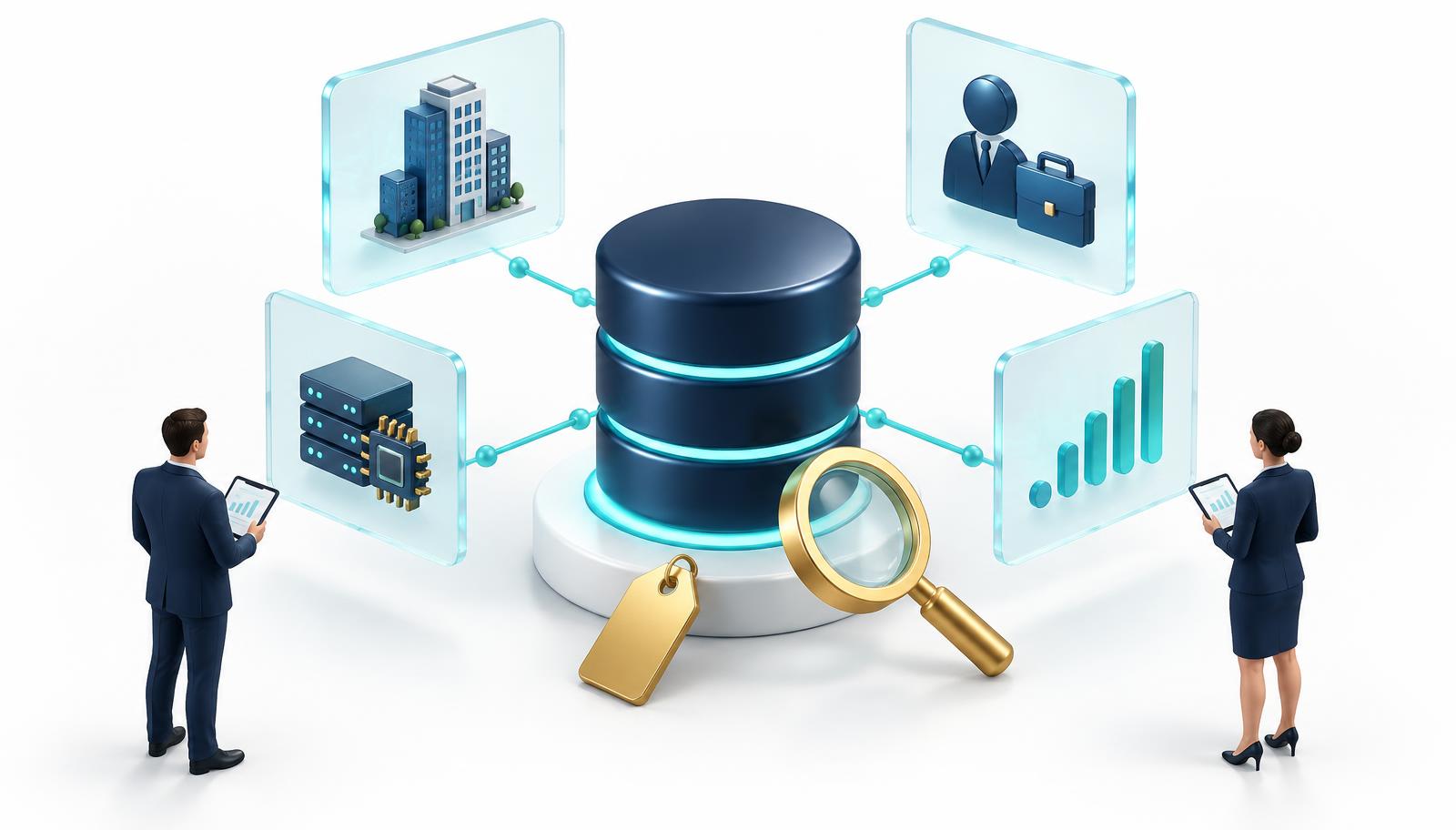
B2B database vendors supply company and business-contact information for research, sales or marketing. They are different from database software vendors that provide the technology used to store records. If your need is a researched audience or missing company attributes, compare business-data coverage and evidence rather than storage engines and infrastructure features.
The buying question is narrower than who has the biggest database. Your team needs data about particular businesses, roles and markets, delivered with enough confidence to support an intended use. A broad catalogue can be convenient while still leaving your most important segment poorly covered.
A representative sample is the fastest way to expose that gap. This guide sets out a review process for B2B data suppliers, not a paid ranking or a list of supposedly best vendors. Keep the same brief and acceptance rules for every candidate so the result is explainable.
Specify whether you need discovery, enrichment or both
Discovery starts with market criteria and finds qualifying companies or people you do not already hold. Enrichment starts with your existing accounts or contacts and adds information. A supplier may offer both, but its strength in one workflow does not prove equal coverage in the other.
For discovery, ask how inclusion rules are applied and how duplicate groups or subsidiaries are handled. For enrichment, submit representative input records and check whether the provider identifies the intended entity. If your brief combines both, evaluate the outputs separately instead of combining them into one flattering match rate.
Write the required fields and the receiving structure into the brief. Decide what counts as usable before results arrive. A role match without a current employer may not support contact research; a verified company without a named person may still support market sizing. Usability depends on the job you need done.
Build a sample that reflects your actual target market
Include ordinary records and difficult ones: smaller businesses, regional offices, acquired brands, unusual industries and contacts with incomplete employer information. Add a small set of known-correct controls. Do not let a supplier select only the examples that it already covers well.
Split the sample by country and audience segment. UK coverage does not establish US coverage, and a broad Europe figure does not tell you about Germany or a particular German industry. Company and role evidence may appear in local-language sources even if the required delivery is English. Agree whether that research is within scope.
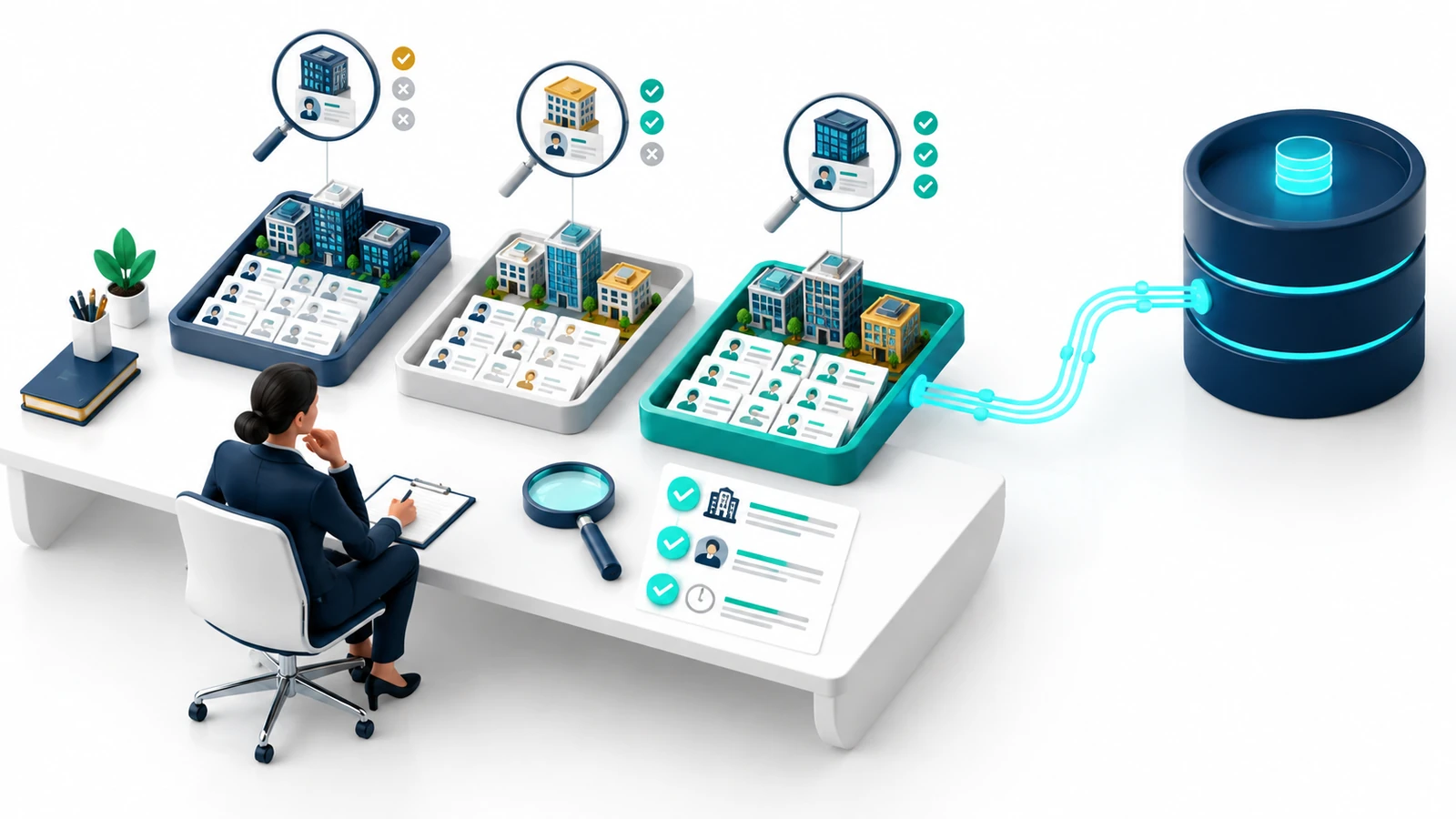
For a discovery test, give each vendor the same inclusion criteria and review the returned entities. For an enrichment test, give each the same eligible input records. Keep rejected and unmatched rows in the report; silently removing them changes the denominator and makes comparisons unreliable.
Review company identity before counting available fields
Check legal or trading name, domain, location and parent relationships against the entity you intended to research. A record describing a parent group may be accurate in itself but wrong for the subsidiary in your target list. That distinction matters for territory, employee size and campaign relevance.
Do not accept an employee estimate or revenue band without knowing its scope. An estimate for a whole group should not be labelled as a local office measurement. Preserve ranges and estimated statuses when that is all the evidence supports. Apparent precision is not proof of quality.
Count correct entity matches separately from filled attributes. This prevents a file with many populated columns from looking strong when those columns describe the wrong business. Ask the vendor how ambiguous cases are returned and whether review notes survive delivery.
Make your next data project easier to review.
B2B Database BuildingCheck role evidence, freshness and contact-route status
For named contacts, review current employer and relevant responsibility, not just seniority. A finance director may be a strong match for one offer and irrelevant for another. Keep the original title, normalised function and the evidence supporting the connection to the brief.
Ask what the dates mean. A file generated today may contain observations collected much earlier. Source publication date, research date and validation date describe different events. Evaluate freshness field by field and against your planned use rather than accepting a single updated date for the entire dataset.
Separate mailbox-validation results from person verification. An address reported as deliverable does not prove the role, current employment or likely interest. Record uncertain statuses and apply your own use rules. A supplier that returns honest unknowns gives you a more reviewable output than one that claims every contact is equally confirmed.
Read licence, correction and data-use terms before purchase
Ask whether records may be exported, stored in your CRM, reused across campaigns and retained after a subscription ends. Check user limits, refresh access and any restrictions on sharing the file with another team or service provider. Two similar-looking prices can cover very different permitted uses.
Clarify correction and replacement terms in writing. Ask which defects qualify, what evidence is required, when issues must be reported and what remedy is offered. Do not assume a replacement policy covers low response rates or every outdated field. Those are commercial terms to agree, not promises to infer from a sales page.
Review provenance and privacy handling with the people responsible for data use in your organisation. Ask how objections, suppressions and corrections are managed and what evidence the supplier can provide. Buying business data does not transfer your own responsibilities for lawful processing or channel-specific marketing requirements.
Compare cost per usable output with a clear denominator
Consider a fictional sample of 100 eligible accounts. Supplier A returns 80 candidate records, of which 60 pass the required identity and field checks. Supplier B returns 70, of which 63 pass. B's smaller return count does not automatically make it weaker. The approved output is what matters to the workflow.
Calculate total test cost divided by approved useful records, including review and import effort. If A's illustrative total is £300 and B's is £315, both work out to £5 per accepted record. These are hypothetical arithmetic examples, not vendor prices, company results or an estimate of what your project will cost.
Compare other constraints alongside that calculation: unresolved critical fields, licence scope, time to delivery and the effort required to handle exceptions. Do not let a single cost figure conceal that one dataset cannot support a mandatory field or your required market.
Choose the delivery approach that fits the remaining gaps
A broad database can suit well-covered markets with standard fields. Custom B2B data research is useful when the brief needs niche company classification, specific business units or roles that require interpretation. A hybrid approach can use existing coverage for routine records and targeted research for the gaps.
Prepare a decision sheet showing strengths, limitations and unresolved questions. Start with a scoped delivery rather than a full rollout, test the import and read accepted records back in the receiving tool. Confirm who handles corrections after delivery and how status and evidence fields will be maintained.
Database Interactive's database-building service begins with the market, required fields and research criteria. Bring that brief and a representative sample to the discussion. The objective is a reviewable business dataset that fits your use, not a claim that one supplier is the best choice for every company.
A practical comparison
| Check | Starting point | What to confirm |
|---|---|---|
| Coverage | A large global record count | Results for your own countries, industries and roles |
| Identity | Similar company name | The intended legal entity, domain and operating location |
| Freshness | A newly exported file | Field-level observation and validation dates |
| Buying terms | Price per row | Approved useful output, permitted uses and correction terms |
Frequently asked questions
What are B2B database vendors?
They supply business company and contact datasets for research, sales and marketing. They are not the same as database software vendors providing storage technology.
How should I compare B2B database vendors?
Use the same brief and representative sample. Compare correct entity matches, required-field usability, role evidence, freshness, licence scope, correction terms and total cost.
Is a larger database always better for B2B marketing?
No. Overall size does not establish coverage of your countries, niche industries or required business roles. Test the segments you actually need.
When is custom B2B data research worth considering?
Consider it when broad datasets leave important gaps in niche accounts, subsidiary identity, classification or specific responsibilities. Agree sources, acceptance rules and a sample before committing to volume.